


Research Data
Research data is defined as any information collected through observations, surveys, experiments, or other research activities and used to verify the results of original scientific research. Research data also include primary data collected using sensors, instruments, devices, through observations and surveys, or by applying other data collection methods.
Research data management is the effective and appropriate handling of data throughout the entire research project and after its completion. It is a crucial part of any research process and includes the efficient and productive collection, storage, use, sharing, and preservation of research data.
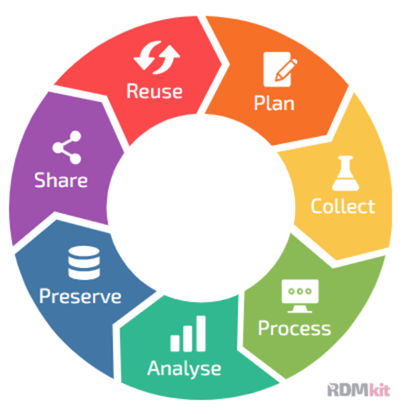
Data Management Lifecycle (Source: RDMkit)
Open access to research data
The Regulations on Open Access to Scientific Publications and Research Data at Kaunas University of Technology describe the main principles, requirements, and responsibilities for sharing research output and research data in open access by KTU employees and students.
Open access to research data is implemented according to the principle “as open as possible, as closed as necessary”.
The requirement to open data is not applicable for the following reasons:
- personal data protection;
- intellectual property of third parties;
- professional, commercial or state secrets and official secrets;
- national security and defence, law enforcement and public safety;
- other legitimate reasons.